
Carbon Monoxide Poisoning: What You Should Know
Medically reviewed by Kinjal N. Sethuraman, MD, MPH, associate professor of emergency medicine at University of Maryland School of Medicine and Medical Director, Hyperbaric and Dive Medicine at the R Adams Cowley Shock Trauma Center.
Carbon monoxide (CO) is often called a “silent killer” – and for good reason. This colorless, odorless gas can cause sudden illness and even death. Because it has no smell or taste, people may not realize they’re being exposed until it’s too late. Even small amounts of carbon monoxide can be dangerous, making early detection critical.
How Carbon Monoxide Affects the Body
When inhaled, carbon monoxide enters the bloodstream and binds to red blood cells 200 to 250 times more easily than oxygen.
In a healthy body, oxygen is breathed in through the lungs, attaches to red blood cells, and is carried to organs throughout the body – keeping everything functioning normally.
But when carbon monoxide is inhaled – such as through smoking or exposure to CO sources – it takes oxygen’s place in the blood. This means the body’s organs are starved of oxygen, which can cause serious harm and, in severe cases, death.
Because oxygen can’t reach vital organs like the brain and heart, carbon monoxide exposure leads to dangerous oxygen deprivation and potentially life-threatening health effects.
Common Sources of Carbon Monoxide
Carbon monoxide can come from many everyday items and situations, including:
- Generators
- Power washers
- Grills
- House fires
- Gas engines and ranges
- Combustion fumes
- Stoves
- Burning charcoal and wood
- Hookahs
Signs and Symptoms of Exposure
Recognizing symptoms early can save lives. Because sources of carbon monoxide poisoning are often used in winter, people can confuse cold or flu symptoms with those of carbon monoxide poisoning. Use this chart to help tell the difference:
| Symptom | CO Poisoning | Flu/Viral Syndrome |
| Confusing/difficulty thinking | Common | No |
| Dizziness | Common | Sometimes |
| Headache | Common (severe) | Sometimes (moderate) |
| Shortness of breath | Sometimes | Sometimes |
| Muscle aches | No | Common |
| Cough, sore throat, runny nose | No | Common |
| Fever | No | Common |
Treatment Options
The first step if you suspect carbon monoxide exposure is simple but urgent: move to fresh air immediately and call 911. Emergency medical teams can provide oxygen therapy, which helps restore oxygen levels in the blood and begin clearing carbon monoxide from the body.
Advanced Treatment: Hyperbaric Oxygen Therapy
In more serious cases, patients may require hyperbaric oxygen therapy — a powerful, evidence-based treatment for carbon monoxide poisoning. In this therapy, patients are exposed to an environment with increased atmospheric pressure, allowing the body to absorb much more oxygen than normal. This process helps displace carbon monoxide from hemoglobin, restoring the blood’s ability to carry oxygen to vital organs. Hyperbaric oxygen therapy also reduces inflammation caused by carbon monoxide.
A Local Resource: The Center for Hyperbaric Medicine at Shock Trauma
Since 1965, the R Adams Cowley Shock Trauma Center has been home to Maryland’s only multi-person hyperbaric chamber, one of the largest and most capable in the region. It can treat up to 23 patients at once and is also the only 24/7 emergency hyperbaric facility in the state.
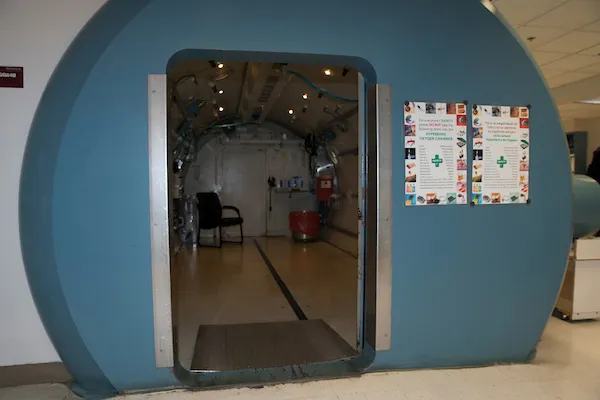
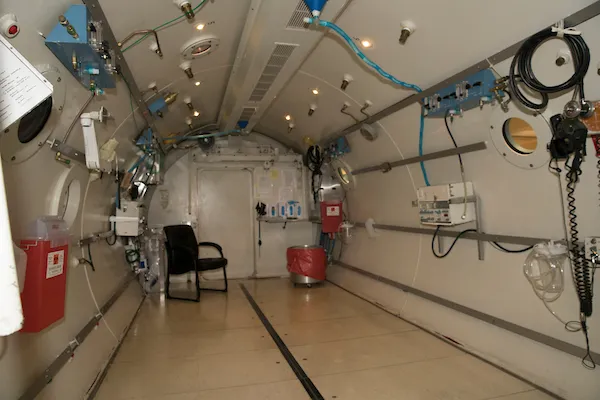
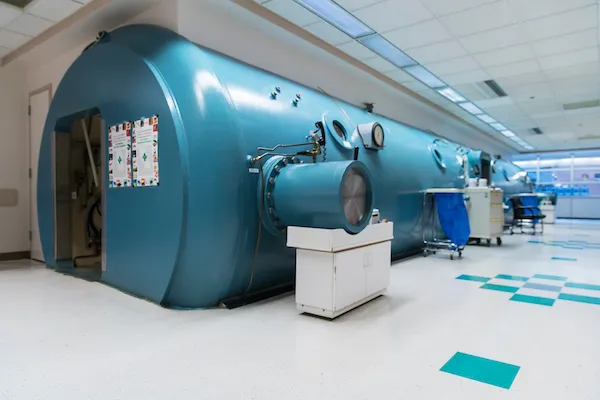
- Treatments in the chamber are called “dives,” because the pressure conditions simulate those experienced underwater.
- During a dive, patients rest comfortably while breathing 100% oxygen through a specialized head tent.
- Specially trained medical personnel remain inside the chamber to monitor every session.
- For carbon monoxide poisoning, patients typically undergo up to three dives, each lasting 80 to 120 minutes, at depths equal to 33–66 feet of seawater pressure.
Tips for Prevention
Carbon monoxide poisoning is preventable. To protect yourself and your loved ones:
- Install a carbon monoxide detector on every floor of your home, especially near sleeping areas.
- Have heating systems, gas appliances and fireplaces inspected and serviced regularly by professionals.
- Only use gas-powered appliances, generators or grills in well-ventilated areas — never indoors or in attached garages.
- If you suspect carbon monoxide exposure, move to fresh air immediately and call 911.
Numbers at a Glance
- More than 100,000 Americans visit the emergency department each year due to carbon monoxide poisoning (CDC, 2025).
- More than 400 people die annually from unintentional CO poisoning not linked to fires (CDC, 2025).
- Admissions to Shock Trauma for CO poisoning:
- 38.2% – Utility gas & household fuels
- 30.9% – Smoke & flames
- 17.6% – Vehicle exhaust
- 13.2% – Other
The Bottom Line
Carbon monoxide poisoning is dangerous, but preventable. By understanding how CO affects the body, knowing where it comes from, and taking simple preventive steps, you can greatly reduce your risk. And thanks to specialized treatment options like hyperbaric oxygen therapy at the Shock Trauma Center, Maryland residents have access to life-saving care when it’s needed most.